
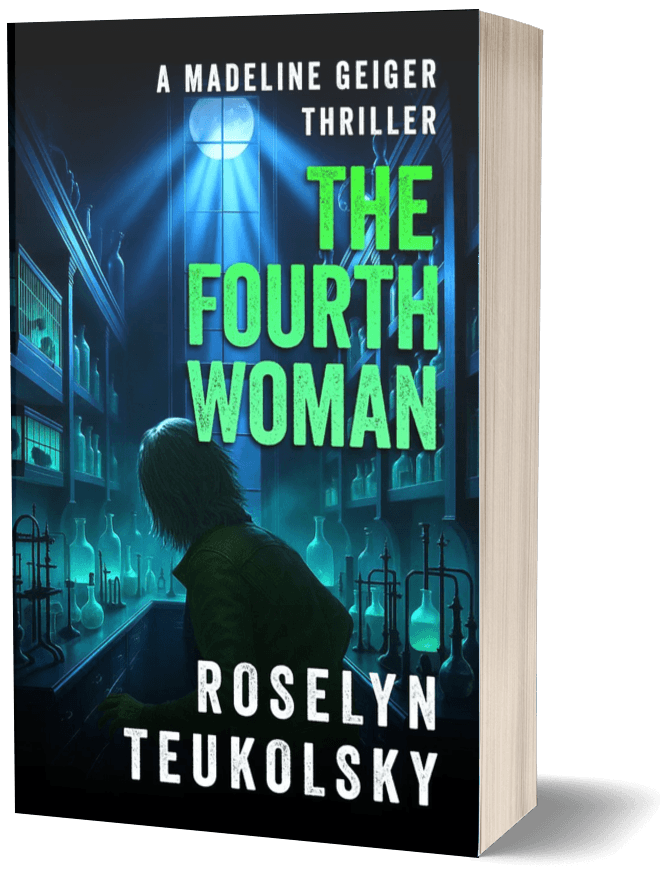
The Fourth woman
A ransomware attack. An online date that takes a menacing turn. A mind-game that invades her entire household.
Madeline Geiger is a cybersecurity expert used to keeping threats at bay. But when a ransomware attack crashes her system, she discovers it’s not just her files under siege—her life and mind are too. Meanwhile, a promising online date with Vincent, a neurobiologist, turns strange. His work? Manipulating rodent behavior with lights and code. His interest in Madeline? Something beyond sex, love, and even marriage.
As her home life spirals—thanks to a fading mother, a watchful new caregiver, and the return of long-buried grief—Madeline begins to suspect she’s being stalked, both digitally and physically. And the deeper she digs, the more disturbing the connections become between her attacker, her suitor, and the dark science lurking behind Vincent’s lab door.
The Fourth Woman is a tense, darkly smart thriller where digital sabotage meets psychological suspense, and a woman must confront not only the stalker behind the screen—but the unraveling happening inside her own home.
Press
I was interviewed about The Fourth Woman by John Crowley. You can listen to the podcast and read the interview here. Check out the book summary reel here.
Watch the trailer

Early Praise
Book Club Questions
Between the two books, Madeline transforms from being a research assistant to business owner. Discuss her evolution.
Comment on the online dating plotline through a cybersecurity expert's eyes. Does this intersection of digital expertise and romantic vulnerability work?
Vincent's work experimenting on rodents—manipulating behavior with light and code—is chilling. Did you find it believable?
What if you knew that the experiments were based on real science, an experiment on mice at Northwestern University? (Scientists Drove Mice to Bond by Zapping Their Brains with Light. NY Times May 2021). Would you believe that this experiment could work on dogs, cats, and …people?
Comment on how the author blends the vulnerability of Madeline's mother's dementia, including the emotional caregiving scenes, with the thriller plot.
Does the author succeed in making the computer science accessible to general readers, while keeping it authentic enough to satisfy tech-savvy readers?
Does the author succeed in combining technology, neurobiology, dementia, online dating, and domestic suspense into a well-paced thriller?